Cedar Shake Roof Repair: 6 Signs to Watch For This Year
10.14.26
8 Min Read
Cedar shake roof repair is one of the most time-sensitive maintenance needs a homeowner in Haddonfield, NJ and surrounding areas can face, because natural wood reacts to weather far faster than manufactured roofing. A cracked shake or a patch of moss may look harmless from the ground, but each is an entry point for water that can reach the underlayment, sheathing, and framing beneath. Knowing the warning signs early is the difference between a few hundred dollars in spot repairs and a five-figure replacement.
- Early detection saves money: Catching damage in its first season keeps repairs in the hundreds rather than the thousands.
- Water is the real enemy: Nearly every cedar failure traces back to trapped moisture, poor ventilation, or organic growth.
- Specialized work matters: Cedar demands fasteners, techniques, and grading knowledge that general roofers rarely carry.
6 Signs Your Cedar Shake Roof Needs Repair
The six signs below are the most reliable early indicators that a cedar shake roof needs professional attention before minor damage becomes structural. Homeowners in Haddonfield, NJ and surrounding areas should walk their property line each spring and fall and look for these red flags, ideally with binoculars rather than by climbing the roof.
1. Cracked, Split, or Broken Shakes
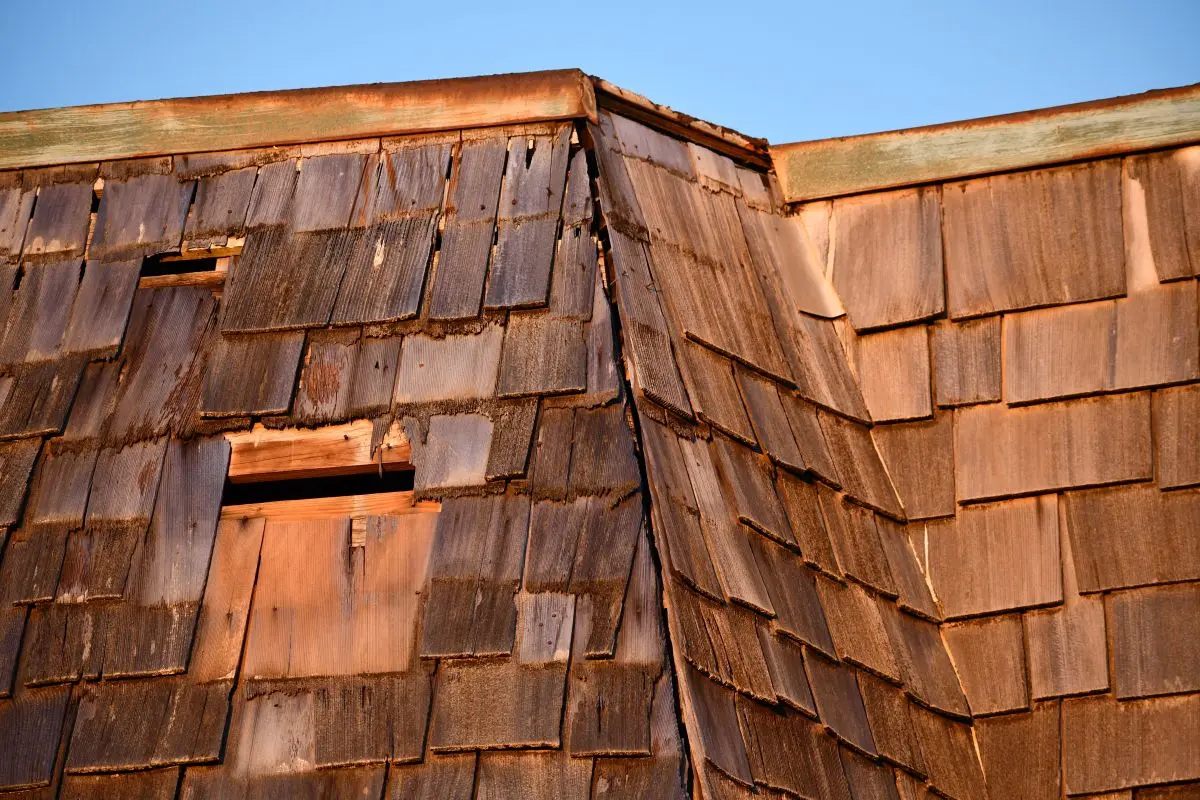
Cracked, split, or broken shakes are the clearest signal that cedar shake roof repair is needed, because every fracture is a direct path for water to reach the layers below. Shakes crack from age, foot traffic, falling branches, and hail, and once the surface is compromised the exposed wood absorbs water and decays quickly. A few scattered breaks are a routine repair, but clusters of cracking often point to an aging roof or a deeper installation problem worth inspecting.
- Visible fractures: Lengthwise splits and broken corners expose raw wood to moisture.
- Impact damage: Dents, punctures, and fresh breaks often appear after severe storms.
- Clustered cracking: Widespread breaks signal age or a systemic installation issue.
2. Curling, Cupping, or Warping Shakes
Curling, cupping, and warping shakes indicate the wood is drying unevenly and pulling away from the roof deck, which breaks the weather seal between courses. As cedar ages and loses its natural oils, edges lift and faces cup, creating raised areas where wind can catch and water can pool. Warped shakes rarely lie flat again, so they are usually replaced, and slope-wide curling often means the roof is nearing the end of its serviceable life.
- Lifted edges: Curled butt ends let wind-driven rain travel underneath the shake.
- Cupped faces: Concave surfaces trap standing water that speeds decay.
- Slope-wide patterns: Broad curling suggests age or ventilation failure, not isolated wear.
3. Moss, Algae, and Fungal Growth
Moss, algae, and fungal growth are among the most damaging cedar problems because they hold moisture against the wood and accelerate rot. Green or black streaking, fuzzy moss in the keyways, and gray fungal patches all signal that the roof is staying too wet, often on shaded slopes or under overhanging trees. The Cedar Shake & Shingle Bureau notes that cedar must be able to breathe, so any accumulation of needles, branches, leaves, and dirt will affect its lifespan.
- Keyway moss: Growth between shakes traps water and can lift entire courses.
- Algae streaking: Dark stains signal chronic dampness even before rot sets in.
- Copper control: Zinc or copper strips at the ridge release ions that suppress moss.
4. Interior Leaks, Water Stains, and Ceiling Damage
Interior leaks, water stains, and ceiling damage confirm the roof has already been breached and that repair cannot wait. Brown rings on ceilings, damp attic insulation, peeling paint near the roofline, and a musty smell all point to water passing the shakes and underlayment. By the time water shows inside, the roof has usually leaked for weeks, so the affected sheathing and framing must be checked for hidden rot. Excel Slate & Copper offers emergency repair and insurance claims assistance for storm damage.
- Ceiling stains: Brown or yellow rings indicate active or recent water intrusion.
- Attic clues: Damp insulation, daylight through the deck, and mildew reveal the source.
- Flashing failures: Leaks often begin at chimneys, valleys, and skylights, not the field.
5. Missing or Loose Shakes and Failed Fasteners
Missing or loose shakes and failed fasteners create immediate vulnerabilities that let water and wind attack the roof deck directly. Gaps where shakes have blown off, shakes that shift when touched, and rust stains bleeding down the roof all indicate fastener failure, most often from corroded galvanized nails. Cedar should be secured with stainless steel or copper nails that outlast the wood itself, so a roof losing shakes to nail failure needs prompt evaluation of how it was installed.
- Open gaps: Missing shakes expose underlayment and decking to direct weather.
- Rust streaks: Orange staining reveals corroding galvanized nails beneath the surface.
- Wrong fasteners: Galvanized nails fail decades before stainless or copper alternatives.
6. Rot, Soft Spots, and Advanced Decay
Rot, soft spots, and advanced decay represent the most serious stage of cedar failure, where the wood has broken down structurally and no longer sheds water. Shakes that feel spongy, crumble at the edges, or show dark punky patches have lost their integrity, and decay often spreads into the sheathing before it is obvious from above. Because rot travels along trapped moisture, a soft area in one spot usually means neighboring shakes and the deck below are compromised too.
- Spongy texture: Soft, yielding shakes have rotted through and must be removed.
- Punky wood: Dark, crumbling patches signal fungal decay in the fibers.
- Deck involvement: Rot frequently reaches the sheathing, requiring structural repair.
What Does Cedar Shake Roof Repair Cost in Haddonfield?
Cedar shake roof repair typically ranges from a few hundred dollars for isolated shake replacement to several thousand for larger sections. The right number depends on how many shakes are affected, the roof pitch and access, and whether decking or flashing also needs work.
How Much Do Minor Cedar Shake Repairs Cost?
Minor cedar shake repairs in New Jersey generally cost between $500 and $1,200 for tasks like replacing a small cluster of cracked or missing shakes, resealing flashing, or clearing and treating a mossy section. Larger repairs involving a full slope or damaged sheathing climb higher, and annual cedar maintenance in the region commonly falls in the $500 to $1,800 range. Because new cedar shake roofing in New Jersey runs roughly $11 to $19 per square foot installed, timely repair is almost always the more economical route.
- Spot repair: Small shake replacement and flashing fixes typically run $500 to $1,200.
- Annual maintenance: Cleaning and treatment in NJ commonly costs $500 to $1,800 per year.
- New installation reference: Cedar shake roofing runs about $11 to $19 per square foot in NJ.
When Is Repair Smarter Than Replacement?
Repair is smarter than replacement when the damage is localized, the roof is under about 20 years old, and the sheathing beneath remains sound. If only a handful of shakes are cracked or missing, or a single slope shows growth and wear, targeted repair restores protection at a fraction of replacement cost. Once curling and rot appear across multiple slopes or the roof has exceeded its expected lifespan, continued patching becomes a poor value and full replacement delivers better long-term results.
- Age matters: Roofs under 20 years old are strong candidates for repair.
- Damage extent: Isolated problems favor repair; slope-wide failure favors replacement.
- Deck condition: Sound sheathing supports repair; widespread rot points to replacement.
Frequently Asked Questions
These are the questions homeowners ask most often about cedar shake roof repair. The short answers below cover inspection frequency, safe timing, and what to expect from a qualified specialist.
How often should a cedar shake roof be inspected?
A cedar shake roof should be professionally inspected at least once a year, ideally in spring or fall, plus after any major storm. Regular inspection catches cracked shakes, early moss, and loose fasteners before they cause leaks. Homeowners can also do a ground-level visual check each season with binoculars.
Can I repair a cedar shake roof myself?
Cedar shake repair is not recommended as a do-it-yourself task because it requires specialized tools, the correct stainless steel or copper fasteners, and safe technique for walking a fragile wood roof. Improper repairs often crack neighboring shakes or use nails that fail within a few years. A cedar specialist protects both the roof and your safety.
How long does cedar shake roof repair take?
Most minor cedar shake repairs are completed in a single day, while larger slope repairs or sheathing work may take two to three days. Timing depends on the extent of damage, weather, and availability of matching shakes. Emergency leak repairs can often be stabilized the same day.
Why Excel Slate & Copper Is the Right Choice for Cedar Shake Roof Repair
When your cedar shake roof shows any of these six warning signs, Excel Slate & Copper brings the specialized wood roofing expertise that homeowners in Haddonfield, NJ and surrounding areas trust. As a licensed and insured historic restoration specialist working with slate, copper, and cedar every day, our team knows the correct fasteners, the right treatment methods, and the difference between a roof that needs a simple repair and one ready for replacement. We back that craftsmanship with emergency repair service, insurance claims assistance, and detailed, no-pressure estimates. Do not let a cracked shake or a patch of moss turn into rotted sheathing and a leaking ceiling. Contact Excel Slate & Copper today for a free estimate on your cedar shake roof repair and protect the beauty and value of your home for years to come.